
How it's made
Pocket Crimes is made by one person in Spain. This is what goes into a case before it reaches your phone.
- 4places
- 4levels
- 2languages
- 1person
Every case is generated, then proven
A case starts from a seed: a map, a cast, and the statements they make. Then a solver that reasons the way a player does works through it from the first clue. If the case has more than one answer, or needs a guess at any point, it is thrown away.
The same reasoning sets the level. A case is expert because of the steps its easiest route asks of you, not just because its board is bigger.
Then a person reads it
No case goes out unread. Each one is opened in a viewer and judged before it is published. A sentence that reads badly is rewritten, and a case that feels unfair is dropped for good.
If something slips through, the corrected case reaches your phone by itself, without an app update.
Each place changes what a clue can say
The rules never change: one person per row and per column, everybody tells the truth, and whoever was alone with the victim did it. What changes is what people can talk about.
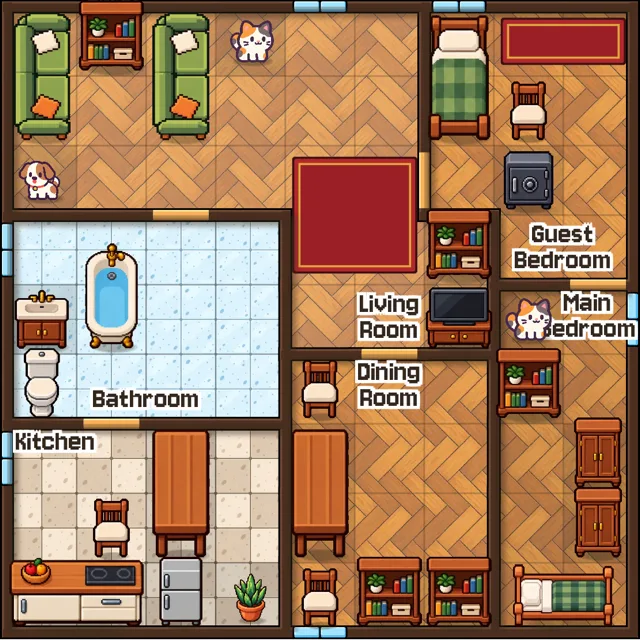
The House has rooms, sofas, a fridge and a cat that never sits still. The Garden has a pond, a lawn, a duck and the sparrows. The Beach has parasols, towels and sandcastles.
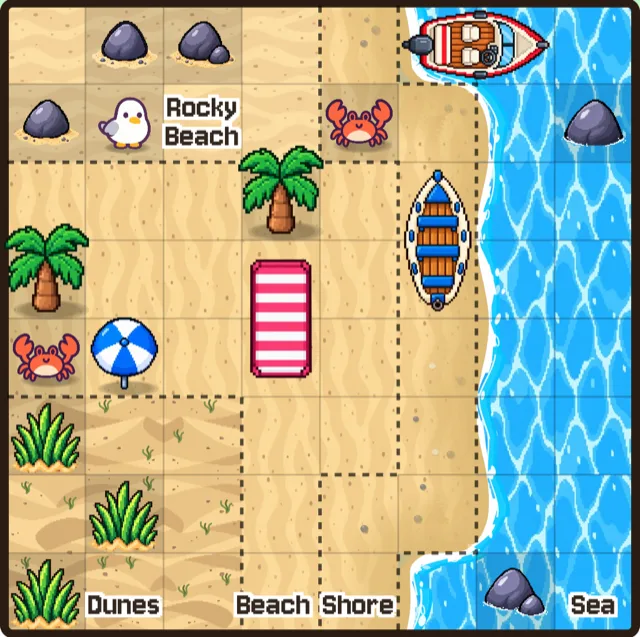
The Cove has boats, rocks, crabs and the open sea.
Two languages, both written
Every statement is put together by a grammar written for its own language. The Spanish one knows that “sentado” becomes “sentada” when the person sitting is a woman, and that “el único” becomes “la única”. Nothing is run through a translator.
Hints that start from your board
A hint does not read you the answer. It looks at the board you have, finds the simplest step left from there and explains it, naming the kind of reasoning so you can spot it on your own next time.
Found something wrong?
In the app, go to Settings → Report a problem, or write to support@pocketcrimes.app. Every message is read.